
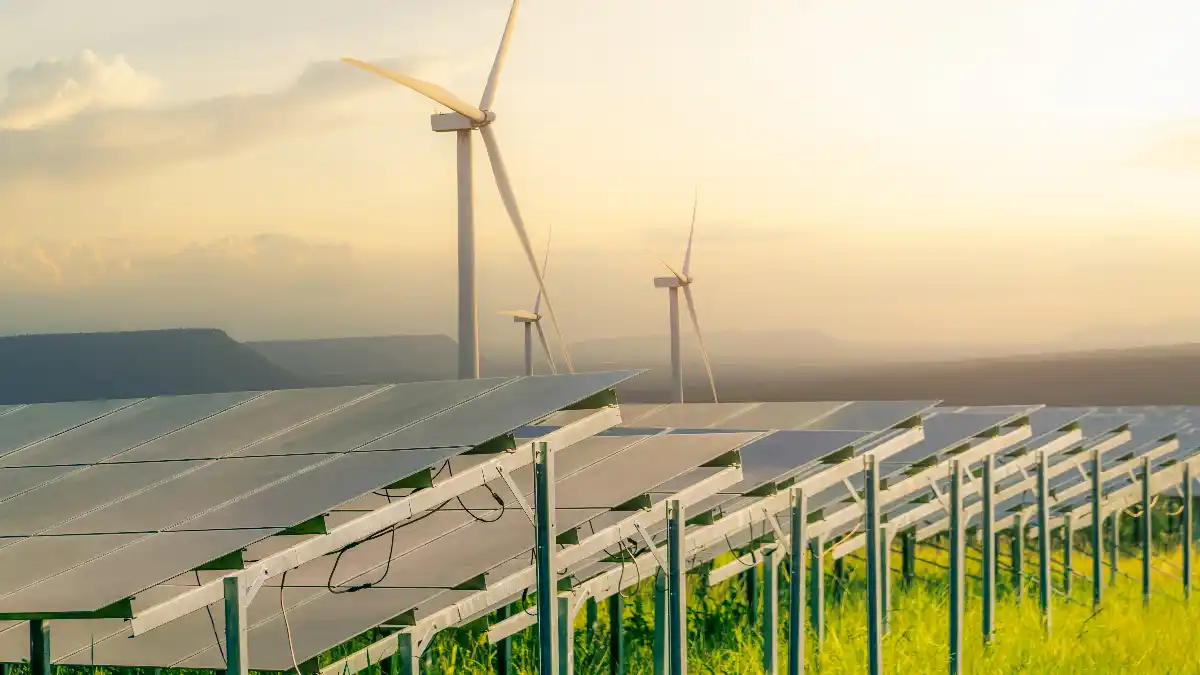
Bitcoin mining is often assumed to be easily powered by renewable energy such as solar. In practice, the storage requirements needed to ensure continuous uptime make fully solar-powered industrial mining uneconomical at present. However, there is a specific scenario where solar becomes strategically valuable: when generation assets are completed before grid interconnection. In these cases, mining acts as a temporary bridging industry, monetising stranded power until transmission infrastructure is ready.
Alongside this, compute infrastructure produces significant recoverable heat. When colocated with district-heating or cooling systems, this thermal output can be reused — improving system-wide energy efficiency. The direction of travel is clear: compute infrastructure and real-world energy networks will increasingly integrate. Mining will play a role in supporting renewable deployment, stabilising energy projects, and enabling more efficient heat-reuse models.
Introduction: Why “Just Use Solar” Isn’t That Simple
The idea that Bitcoin mining should rely entirely on solar energy is raised frequently. The appeal is understandable — renewable, abundant, and clean. However, large-scale mining requires continuous uptime. When the cost of battery storage is added to solar generation, the resulting cost of power becomes uncompetitive versus baseload energy sources. If fully solar-powered heavy industry were commercially viable today at scale, we would already see widespread deployment beyond mining. We do not — and mining is subject to the same realities.
When Solar Power Does Make Sense: Monetising Stranded or Delayed-to-Grid Energy
There is, however, one important exception.
Across multiple regions, solar farms are now being completed before grid export capacity is available. Substations and transmission networks may take two to three years to deliver. During this period, the generation asset exists — but the power cannot be exported.
Without offtake, that energy is simply lost.
In these cases, we structure joint-venture agreements with project developers. We deploy mining infrastructure — sometimes using hardware beyond peak-efficiency years — and we monetise this stranded capacity until the grid is ready.
Mining becomes a stabilising bridge, supporting renewable-energy economics during the most vulnerable phase of development.
Treating Heat as a Secondary Energy Product
Compute infrastructure does more than consume electricity. It produces heat — and heat has value.
In some regions, district-cooling infrastructure exists. In others, particularly in Northern Europe, district-heating systems are well established. By colocating compute facilities with these networks, thermal output can be captured and reused. In effect, the same electricity contributes twice:
- first to Bitcoin network security and compute processing
- then to physical heating or cooling infrastructure
This reduces waste and increases overall energy efficiency across the system.
The Broader Direction of Travel: Energy-Aligned Compute
The industry is moving toward deeper integration between compute loads and real-world energy systems.
Mining is uniquely suited to this shift because it is flexible, mobile, and responsive. It can absorb excess renewable capacity, support early-stage generation projects, and enable thermal reuse where infrastructure exists. When designed and operated with discipline, mining strengthens — rather than competes with — broader energy-market objectives.
Conclusion: Building Resilient, Energy-Aligned Infrastructure
For me, the long-term objective remains resilience.
Resilient compute infrastructure is:
- powered by durable, dependable energy sources
- capable of integrating with grid and heating/cooling networks
- aligned with real-world economics rather than short-term market cycles
When Bitcoin mining supports renewable-energy deployment and enables efficient heat reuse, it becomes a constructive participant in the global energy ecosystem. That is the direction I believe the industry is heading — toward infrastructure that is not only energy-aware, but energy-aligned.